Lisheen Mines Anaerobic Digestion Plant — Tipperary
A landmark 98,000-tonne anaerobic digestion facility on the former Lisheen Mine site in Co. Tipperary, delivering renewable biomethane to the national gas grid from agricultural and organic waste feedstocks.

.svg)
Quick Project Facts
Project Background
Transforming a Former Mine Into a Renewable Energy Hub
The Lisheen Mines Anaerobic Digestion project represents one of the most significant renewable energy developments in the Irish Midlands — and a compelling example of what's possible when brownfield industrial land is repurposed for the circular economy.
Located on the site of the former Lisheen zinc and lead mine in Co. Tipperary, this project will process 98,000 tonnes of agricultural and organic waste feedstock annually, converting it into biomethane for direct injection into Ireland's national gas grid.
The Challenge
Ireland faces a dual pressure: mounting volumes of agricultural waste — including manure, sludge, and crop residues — that generate significant greenhouse gas emissions if left unmanaged, and a natural gas supply that remains heavily reliant on fossil fuel imports. Both problems demand the same solution: large-scale anaerobic digestion infrastructure capable of processing agricultural organics at volume.
The former Lisheen Mine site offered a ready-made opportunity. With 13.5 acres of industrial-grade brownfield land, direct access to the national road network, and proximity to existing waste treatment infrastructure, the site was ideal for a high-throughput AD facility.
The Solution
Developed by Nua Bioenergy Ltd, the facility will process a diverse mix of feedstocks each year:
- 8,000 tonnes of wholecrop silage
- 30,000 tonnes of farmyard manure (including horse manure and pulverised straw)
- 30,000 tonnes of belly grass sludge
- 15,000 tonnes of dairy sludge and dewatered manure
- 15,000 tonnes of broiler manure
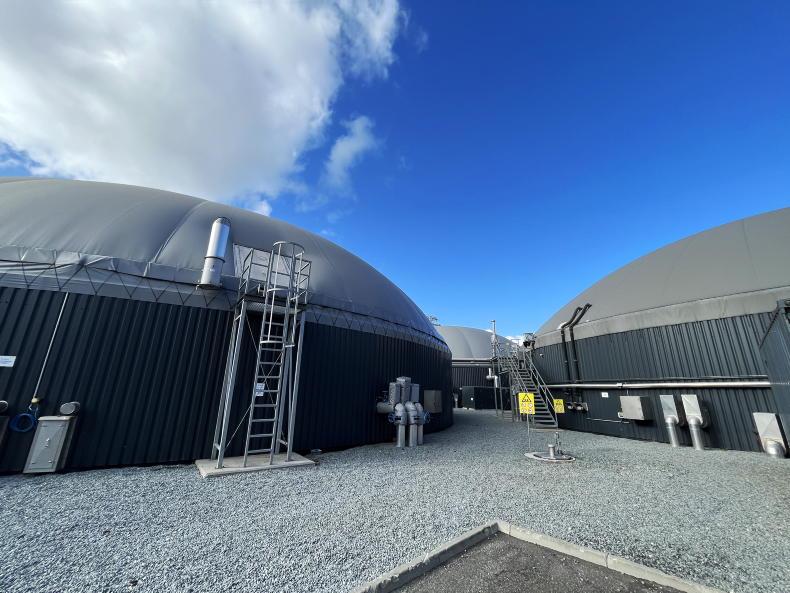
The plant infrastructure includes four primary and three secondary digester tanks, feed hoppers, three storage clamps, two storage sheds, and a fertiliser processing and storage unit. Digestate produced will be returned to supplying farms as a high-quality biofertiliser, completing a genuine circular nutrient loop.
Planning permission was granted by Tipperary County Council and upheld by An Coimisiún Pleanála in December 2025, after independent review confirmed the development's full consistency with the Climate Action and Low Carbon Development Act.
Results & Impact
- 98,000 tonnes of agricultural waste processed annually
- Biomethane injected directly into the national gas grid as a renewable natural gas substitute
- 4–6 permanent jobs created on site
- Full circular nutrient loop: digestate returned to supplying farms
- Brownfield land redevelopment — no greenfield land-use change
What This Means for Waste-Heavy Agricultural Operations
If your agricultural enterprise generates significant volumes of manure, sludge, or crop residue, anaerobic digestion can convert that waste stream into a revenue-generating energy asset while dramatically reducing your Scope 1 emissions. PGE's team can assess the viability of dedicated or shared AD infrastructure for your operation.
About Premier Green Energy
Premier Green Energy (PGE) is an Irish waste-to-energy company specialising in the design, build, and operation of pyrolysis and biorefinery systems. PGE's patented PRIMA 3000 system converts industrial and commercial waste into syngas, carbon char, and recovered heat — creating circular economy value for clients across manufacturing, healthcare, and agri-food sectors.

.jpg)