Turquoise Hydrogen: How Pyrolysis Is Unlocking Ireland's Green Energy Future

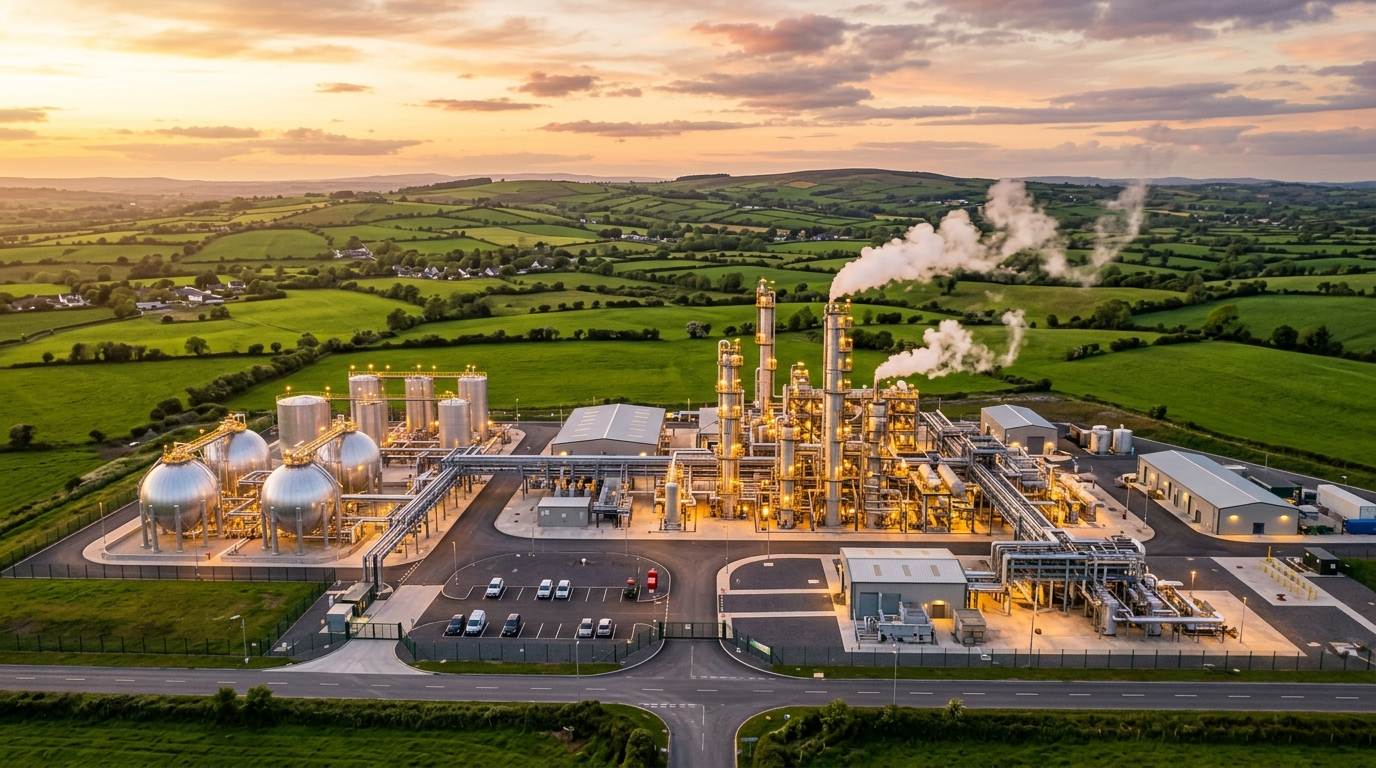
Ireland stands at an energy crossroads. With the EU's 2030 climate targets pressing hard on industry, transport, and manufacturing, the search for scalable, affordable clean energy has never been more urgent. While green hydrogen — produced via electrolysis powered by renewables — commands most of the headlines, a quieter revolution is emerging from the pyrolysis sector: turquoise hydrogen.
Produced through the thermal decomposition of natural gas or organic waste, turquoise hydrogen offers a compelling proposition for Irish businesses: lower carbon intensity than conventional “grey” hydrogen, at a fraction of the cost of its green counterpart. As Premier Green Energy’s experience with advanced pyrolysis demonstrates, Ireland has the feedstock, the infrastructure appetite, and the industrial demand to make turquoise hydrogen a cornerstone of the country’s clean energy transition.
What Is Turquoise Hydrogen — and Why Does It Matter?
Most people are familiar with the colour-coded hydrogen spectrum: grey (from natural gas, high-emissions), blue (grey with carbon capture), and green (from renewable-powered electrolysis). Turquoise sits in a distinct category.
Turquoise hydrogen is produced through a process called methane pyrolysis: natural gas or biogas is passed through a high-temperature reactor — typically above 1,000°C — in the absence of oxygen. The methane molecules decompose into hydrogen gas and solid carbon black, rather than CO². The result is a hydrogen stream with near-zero direct carbon emissions, and a solid carbon co-product with significant commercial value.
This distinction matters enormously for Ireland’s industrial decarbonisation strategy. Unlike carbon capture and storage (required for blue hydrogen), solid carbon is a tangible, tradeable commodity — used in tyre manufacturing, battery anodes, and construction materials. Rather than sequestering carbon underground, turquoise hydrogen processes lock it into durable products, creating circular economy value rather than liability.
For Irish businesses facing carbon border adjustment mechanisms and tightening emissions reporting under the EU’s Corporate Sustainability Reporting Directive (CSRD), turquoise hydrogen offers a credible, auditable decarbonisation pathway that sidesteps both the infrastructure complexity of CCS and the intermittency constraints of renewables-dependent green hydrogen production.
Ireland’s Pyrolysis Advantage: Feedstock, Infrastructure, and Opportunity
Ireland’s waste stream and agricultural sector create a natural strategic advantage for pyrolysis-derived hydrogen. Beyond methane pyrolysis of natural gas, organic waste feedstocks — agricultural residues, municipal solid waste (MSW), forestry biomass, and end-of-life plastics — can all be processed through pyrolysis systems to produce a syngas rich in hydrogen.
This “bio-turquoise” or waste-derived hydrogen pathway aligns precisely with Premier Green Energy’s core mission: transforming difficult-to-recycle and hard-to-treat waste materials into clean energy vectors. Ireland generates approximately 14 million tonnes of waste annually, much of it currently consigned to landfill or costly export for incineration. A strategically deployed network of pyrolysis facilities could redirect a significant portion of this stream into domestic hydrogen production, reducing both waste disposal costs and energy import dependency.
Several factors make the Irish context particularly favourable:
Gas grid compatibility: Ireland’s existing natural gas infrastructure can transport hydrogen blends — currently up to 20% hydrogen by volume — without significant modification. This creates an immediate route to market for pyrolysis-derived hydrogen as the grid gradually transitions.
Industrial clusters: The pharmaceutical, food processing, cement, and data centre sectors — all significant energy consumers in Ireland — have firm decarbonisation commitments and active demand for low-carbon energy. Turquoise hydrogen, produced at or near industrial clusters, eliminates the transport and storage challenges that constrain hydrogen distribution economics.
EU hydrogen policy alignment: The European Hydrogen Bank, launched in 2024, and subsequent funding streams under REPowerEU create accessible capital for pyrolysis-to-hydrogen projects that meet renewable fuels of non-biological origin (RFNBO) or recycled carbon fuels (RCF) criteria.
The Carbon Black Opportunity: Closing the Industrial Loop
One of the most under-appreciated aspects of turquoise hydrogen production is the solid carbon black co-product. For every kilogram of methane processed, pyrolysis yields approximately 3kg of solid carbon alongside 0.5kg of hydrogen. This isn’t a waste product — it’s a high-value industrial feedstock.
Global demand for carbon black exceeds 16 million tonnes annually, driven by tyre manufacturing, plastics compounding, coatings, and increasingly by battery anode materials as the electric vehicle market scales. Prices for high-purity carbon black range from €800 to €3,000 per tonne depending on grade and application.
For Irish pyrolysis operators, the economics become compelling when carbon black revenue is modelled into the project alongside hydrogen offtake agreements. Unlike the capital-intensive electrolysers and renewable power purchase agreements underpinning green hydrogen, methane pyrolysis plants can be right-sized for industrial parks, waste management facilities, or utility-scale energy hubs — and the carbon black co-product materially offsets operating costs.
Premier Green Energy has positioned its pyrolysis expertise precisely at this intersection: designing systems that simultaneously address waste treatment economics and clean energy production, with the carbon black stream providing an additional commercial anchor that traditional waste-to-energy approaches cannot replicate.
Policy Momentum: What Ireland’s Hydrogen Strategy Means for Business
The Irish Government’s National Hydrogen Strategy, updated in 2025, identifies hydrogen as a priority energy vector for hard-to-abate sectors through the 2030–2040 period. While much policy emphasis has fallen on offshore wind-powered green hydrogen (leveraging Ireland’s 70GW+ offshore wind resource), the strategy explicitly acknowledges the role of low-carbon hydrogen from alternative production pathways during the transition period.
This creates a window of opportunity for pyrolysis operators and their industrial customers to establish turquoise hydrogen supply chains, secure offtake agreements, and build operational track records — before the more capital-intensive green hydrogen infrastructure matures.
EU Taxonomy alignment is a key consideration. Pyrolysis-derived hydrogen from waste or biomass feedstocks can qualify as a sustainable activity under the EU Taxonomy’s climate change mitigation objective, provided lifecycle emissions meet the relevant thresholds. This matters for corporate treasury teams: Taxonomy-aligned investments attract preferential green financing terms and satisfy the growing demands of ESG-focused institutional investors.
For Irish SMEs and mid-market industrials, working with a specialist pyrolysis partner like Premier Green Energy provides access to the technical expertise, regulatory navigation, and project structuring experience needed to move from feasibility to operations efficiently.
What Irish Businesses Should Do Now
The businesses that will benefit most from Ireland’s hydrogen transition are those that act on commercial intelligence rather than waiting for the technology to become mainstream. The transition period — roughly 2025 to 2030 — is when the most advantageous offtake terms, planning consents, and grid connection slots will be secured.
Concrete steps for forward-looking Irish industrials:
- Conduct a hydrogen readiness assessment: Understand your current gas consumption profile, process heat requirements, and the realistic substitution potential for hydrogen — both pure and blended.
- Engage with pyrolysis project developers early: Companies bringing waste-to-hydrogen projects to the Irish market are actively seeking anchor customers and co-location partners. Early engagement shapes project design and secures preferential commercial terms.
- Map your waste streams: Many industrial operators generate organic waste or mixed plastic waste that could serve as pyrolysis feedstock, potentially creating a revenue stream from material that currently incurs disposal costs.
- Monitor EU Taxonomy and CSRD reporting obligations: Decarbonisation investments made now will appear in mandatory sustainability reports from 2026 onward — early movers will have demonstrably better disclosure metrics.
The Road Ahead: Pyrolysis at the Heart of Ireland’s Clean Energy Story
Ireland’s energy transition will not be powered by a single technology. It will require an intelligent mix of offshore wind, grid-scale storage, demand response, and clean hydrogen — produced by multiple pathways, for multiple end uses. Turquoise hydrogen from pyrolysis occupies a strategically important niche in this system: scalable, feedstock-flexible, commercially de-risked by the carbon black co-product, and deployable at a range of scales.
Premier Green Energy’s focus on advanced pyrolysis technology positions the company — and its industrial partners — at the leading edge of this transition. The question for Irish business leaders is not whether hydrogen will reshape the energy landscape, but whether they will be early beneficiaries or late adopters.
For those ready to explore the commercial and operational possibilities of pyrolysis-derived hydrogen, Premier Green Energy offers the expertise and track record to turn strategic interest into operational reality.
Ready to understand what pyrolysis-derived hydrogen could mean for your business? Contact Premier Green Energy to arrange a no-obligation technical consultation with our team.


.svg)
.svg)