Pyrolysis at Scale: How Ireland's Businesses Can Meet 2026 Plastic Waste Targets Through Chemical Recycling

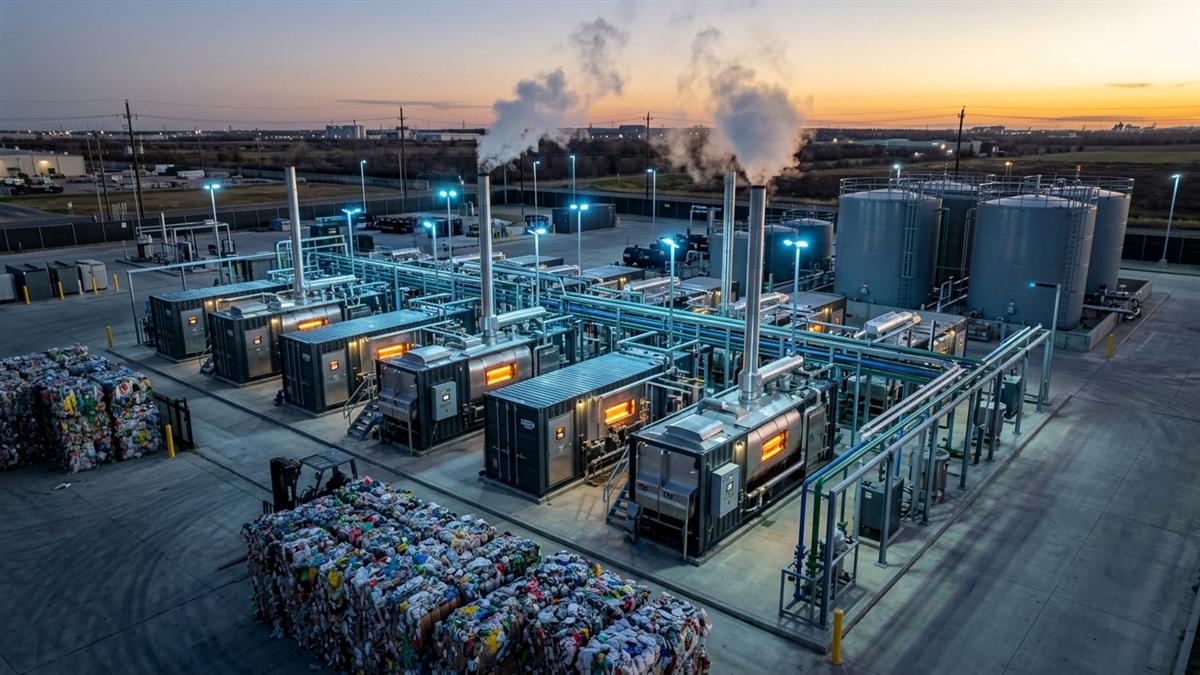
As the mid-point of 2026 arrives, Irish businesses operating in manufacturing, retail, logistics, and food production are increasingly confronting an uncomfortable reality: plastic waste management has moved from an operational footnote to a strategic imperative. With EU Packaging and Packaging Waste Regulation (PPWR) enforcement ramping up and Ireland's own circular economy targets tightening, the question is no longer whether to act — it's how to act at scale.
Pyrolysis — the thermochemical breakdown of plastic waste into fuel oil, syngas, and char — is emerging as one of the most promising answers to that question. At Premier Green Energy, we have spent years refining and deploying pyrolysis systems that turn non-recyclable plastic waste streams into usable energy products, and the commercial case has never been stronger.
Why Traditional Recycling Alone Is Not Enough
Mechanical recycling — sorting, washing, and re-extruding plastics — remains the most visible form of plastic waste processing in Ireland. It works well for clean, single-polymer streams such as PET bottles or HDPE milk containers. But the reality of industrial plastic waste is far messier.
Mixed polymers, contaminated films, multilayer packaging, and post-industrial production waste are either prohibitively expensive to sort for mechanical recycling or simply unacceptable to conventional recyclers. The result is that a significant proportion of plastic waste that could not go to landfill or incineration has, for years, been exported — often to markets with lower environmental standards.
The PPWR and associated extended producer responsibility (EPR) frameworks are closing that loop. Exportation as a disposal strategy is under increasing regulatory scrutiny, and the cost of non-compliance is rising sharply. Businesses that relied on offshoring their waste problem are now facing both financial penalties and reputational exposure.
Chemical recycling — and pyrolysis in particular — addresses exactly the material categories that mechanical recycling cannot. By applying heat in a low-oxygen or oxygen-free environment, pyrolysis breaks polymer chains at a molecular level, producing:
- Pyrolysis oil (PO): a fuel-grade product usable in industrial burners, marine engines, or as a refinery feedstock for new plastics production
- Syngas: a combustible gas that can power the pyrolysis process itself, improving overall energy efficiency
- Char/carbon black: a solid residue with applications in rubber compounding, pigments, and soil amendment
The Economics of On-Site Pyrolysis in 2026
The business case for pyrolysis has strengthened considerably over the past 18 months, driven by three converging forces.
Rising landfill and disposal costs. Ireland's landfill levy has increased year-on-year, and gate fees for mixed plastic waste at licensed facilities have risen sharply. For a mid-sized manufacturer generating several hundred tonnes of plastic waste annually, disposal costs can represent a six-figure annual liability. Pyrolysis converts that liability into a recoverable asset.
Pyrolysis oil demand. The marine and heavy industry sectors face their own fuel transition pressures, and pyrolysis oil — which can be blended or refined to meet fuel specifications — is attracting serious purchasing interest from industrial buyers. Companies that invest in pyrolysis capability now are positioning themselves to generate a revenue stream from what was previously a cost centre.
Capital equipment maturity. Pyrolysis technology has moved well beyond the proof-of-concept phase. Modular, containerised pyrolysis units — such as those deployed by Premier Green Energy — can be installed on-site at manufacturing facilities or at centralised processing hubs, offering operational flexibility that large fixed-plant infrastructure cannot match. Throughput capacity ranging from 500 kg to multiple tonnes per day can be configured to match site-specific waste volumes.
Meeting Ireland's Circular Economy Obligations
The Circular Economy and Miscellaneous Provisions Act introduced legally binding obligations on Irish businesses and public bodies, and the regulatory environment continues to evolve. Key pressure points for businesses in 2026 include:
- Producer responsibility: Organisations placing plastic packaging on the Irish market are increasingly liable for the end-of-life costs of that packaging. Chemical recycling provides a credible, auditable diversion pathway that can substantiate EPR compliance claims.
- Scope 3 emissions reporting: For businesses operating within CSRD (Corporate Sustainability Reporting Directive) scope, the treatment of industrial waste now contributes to Scope 3 emissions calculations. Diverting plastic waste to pyrolysis — and recovering fuel from it — materially improves those figures compared to incineration or landfill.
- Green procurement and tendering: Irish public and private sector procurement increasingly requires evidence of sustainable waste management practice. Businesses with a demonstrable circular economy strategy for their plastic waste are better positioned in competitive tendering processes.
What a Pyrolysis Deployment Looks Like in Practice
At Premier Green Energy, our deployment approach is designed to minimise disruption to existing operations. A typical engagement follows this sequence:
- Waste stream audit: We analyse the composition, volume, and contamination profile of the client's plastic waste to determine feedstock suitability and projected output yields.
- System specification: Based on audit findings, we recommend the appropriate pyrolysis unit configuration — capacity, pre-treatment requirements, and output handling.
- Installation and commissioning: Modular units are typically commissioned within eight to twelve weeks of order confirmation. Our engineering team handles all aspects of installation, including emissions monitoring and compliance instrumentation.
- Ongoing support and offtake: We maintain operational relationships with clients post-commissioning, including planned maintenance, performance monitoring, and — where applicable — facilitation of pyrolysis oil offtake agreements.
The model is not limited to large enterprises. Waste management consolidators, industrial estates, and regional cluster arrangements can aggregate plastic waste from multiple smaller producers, achieving the throughput volumes that make pyrolysis economically optimal.
The Strategic Moment Is Now
Ireland is at an inflection point in its plastic waste management journey. The regulatory pressure is real, the disposal cost trajectory is clear, and the technology to do something genuinely productive with non-recyclable plastic waste is proven and commercially available.
Businesses that treat this moment as an opportunity rather than a compliance burden will find themselves with a competitive advantage: lower net waste costs, an emerging revenue stream from recovered fuel, and a substantive sustainability story that resonates with customers, investors, and public procurement bodies alike.
Premier Green Energy specialises in waste-to-energy and pyrolysis solutions designed specifically for the Irish and broader European B2B market. If your organisation is evaluating chemical recycling as part of its waste strategy, we would welcome the opportunity to discuss your specific situation.
Contact Premier Green Energy today to arrange a no-obligation waste stream assessment and discover what pyrolysis could mean for your business. Visit pge.ie or speak directly with our technical team.


.svg)
.svg)