How Pyrolysis Is Closing the Loop on Ireland's Hard-to-Recycle Plastics

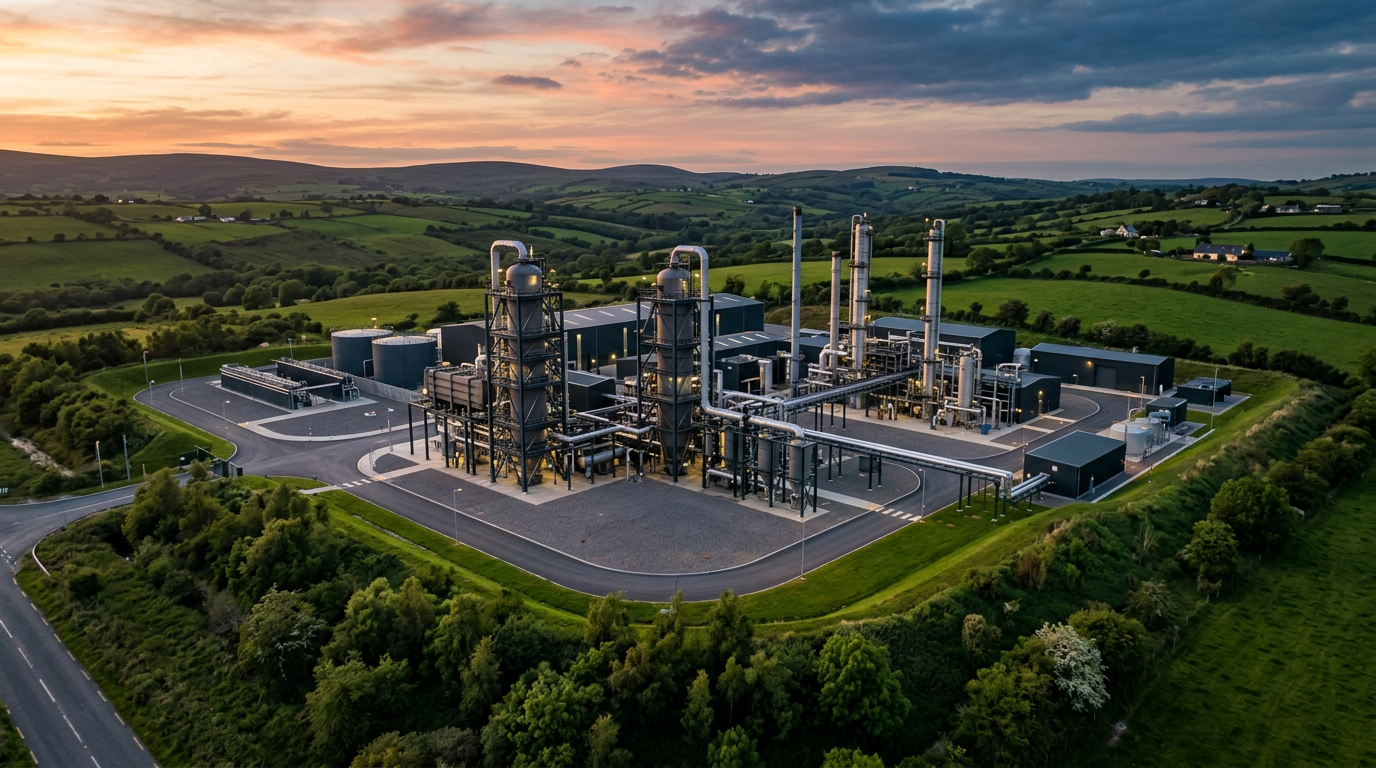
Ireland generates approximately 1.1 million tonnes of plastic waste annually — and a significant portion of that waste still ends up in landfill or energy recovery, not because we lack ambition, but because conventional mechanical recycling cannot handle it. Contaminated packaging, multi-layer films, and mixed polymer streams continue to defeat sorting infrastructure that was never designed for today's material complexity.
The European Union's revised Packaging and Packaging Waste Regulation, now in active implementation, mandates recycled content thresholds that chemical recycling — and pyrolysis in particular — is uniquely positioned to meet. For Irish businesses managing industrial plastic waste streams, that regulatory reality is reshaping procurement strategy, supply chain decisions, and ESG reporting frameworks right now.
At Premier Green Energy, we have been at the forefront of deploying advanced pyrolysis solutions in Ireland and across the UK. Here is what the current landscape looks like — and why the next eighteen months represent a pivotal window of opportunity.
Why Mechanical Recycling Alone Cannot Solve the Problem
Mechanical recycling is the cornerstone of Ireland's circular economy infrastructure, and for good reason: it is cost-effective, energy-efficient, and technologically mature. But it operates within hard constraints.
Polyethylene terephthalate (PET) bottles and HDPE containers can be sorted, cleaned, and re-extruded with relative reliability. Multi-layer packaging — the kind used for food-grade products, medical devices, and industrial films — cannot. Neither can heavily contaminated post-industrial waste, mixed polymer streams from agricultural operations, or plastics from the construction and demolition sector.
In practice, Ireland's mechanical recycling infrastructure handles roughly 30–35% of plastic waste generated domestically. The remainder exits through energy recovery, landfill export, or increasingly, chemical recycling pathways. The EU's target of 55% plastic packaging recycling by 2030, with specific mandates on recycled content by material type, creates a structural gap that mechanical processes alone cannot bridge. Chemical recycling — and pyrolysis specifically — fills that gap.
Critically, the EU framework now distinguishes between mechanical and chemical recycling in its reporting and compliance calculations. Businesses that invest early in certified chemical recycling partnerships will be better positioned to meet both current disclosure requirements and future mandatory targets.
Pyrolysis in 2026: A Mature Technology Reaching Commercial Scale
Pyrolysis is not a new concept, but it has historically struggled to cross the chasm from pilot project to commercial viability. High capital requirements, feedstock consistency challenges, and a regulatory environment that was slow to classify pyrolysis oil as a recycled material — rather than a waste product — all contributed to sluggish adoption in earlier years.
That has changed materially.
The EU Taxonomy for Sustainable Finance has clarified classification criteria for chemical recycling outputs. Regulatory discussions have advanced towards formal recognition of pyrolysis-derived naphtha as a circular feedstock eligible for mass balance accounting. And critically, offtake certainty has improved as major petrochemical producers — operating under their own recycled content commitments — have entered long-term purchasing agreements for pyrolysis oil.
At the process level, modern continuous-feed pyrolysis systems have resolved many of the throughput and yield challenges that constrained earlier batch systems. Feedstock pre-processing — sorting, shredding, drying — has become more automated and cost-effective. Output quality, particularly pyrolysis oil calorific value and contaminant profiles, is now consistent enough to meet refinery and cracker specifications without further upgrading.
For Irish businesses generating hard-to-recycle plastic waste, this means that pyrolysis is no longer a speculative disposal route. It is a commercially viable, legally recognised, and ESG-credible solution with a functioning market on both sides of the feedstock-to-output equation.
What This Means for Irish Businesses Today
The practical implications for businesses across manufacturing, food production, agriculture, construction, and retail are significant and immediate.
First, compliance pressure is mounting. The Corporate Sustainability Reporting Directive (CSRD), now mandatory for medium and large Irish enterprises, requires material disclosure of waste streams, disposal routes, and circular economy performance. Businesses that cannot demonstrate credible plastic waste diversion strategies face regulatory exposure and reputational risk with institutional investors, procurement partners, and export customers throughout the EU single market.
Second, the economics have shifted. Gate fees for mixed plastic waste entering incineration pathways have risen as capacity tightens across Europe. By contrast, high-quality, segregated plastic feedstocks suitable for pyrolysis carry different economics — and in some cases, can qualify for commercial arrangements where the value of the recycled output is shared with the upstream waste generator.
Third, supply chain requirements are hardening. Major retailers and brand owners operating in Ireland under Extended Producer Responsibility (EPR) obligations are increasingly requiring their suppliers to demonstrate circular end-of-life pathways for plastic packaging. Pyrolysis-backed certification is emerging as one of the few credible routes available for hard-to-recycle materials that have no viable mechanical alternative.
At Premier Green Energy, we work directly with Irish businesses to assess their plastic waste streams, identify pyrolysis-eligible feedstocks, and design integrated collection, pre-processing, and routing solutions that deliver both compliance confidence and commercial benefit. Our approach is bespoke — because no two waste streams are identical — and grounded in the operational realities of Irish industry.
Conclusion: The Window Is Open
The opportunity for proactive action is real, but it will not remain open indefinitely. As pyrolysis capacity in Ireland and across Europe fills under long-term offtake agreements, and as regulatory scrutiny of plastic waste management intensifies, businesses that have not yet developed a credible chemical recycling strategy will find themselves at a structural disadvantage — both commercially and in terms of compliance.
The businesses that act now will secure preferred access to certified pyrolysis pathways, lock in competitive gate fee structures, and build the ESG narrative that procurement teams, investors, and regulators increasingly demand.
Contact Premier Green Energy today to arrange a no-obligation site assessment and discover how pyrolysis can transform your plastic waste liabilities into circular economy assets that deliver measurable value.


.svg)
.svg)