From Plastic Waste to Fuel: How Advanced Pyrolysis is Reshaping Ireland's Circular Economy

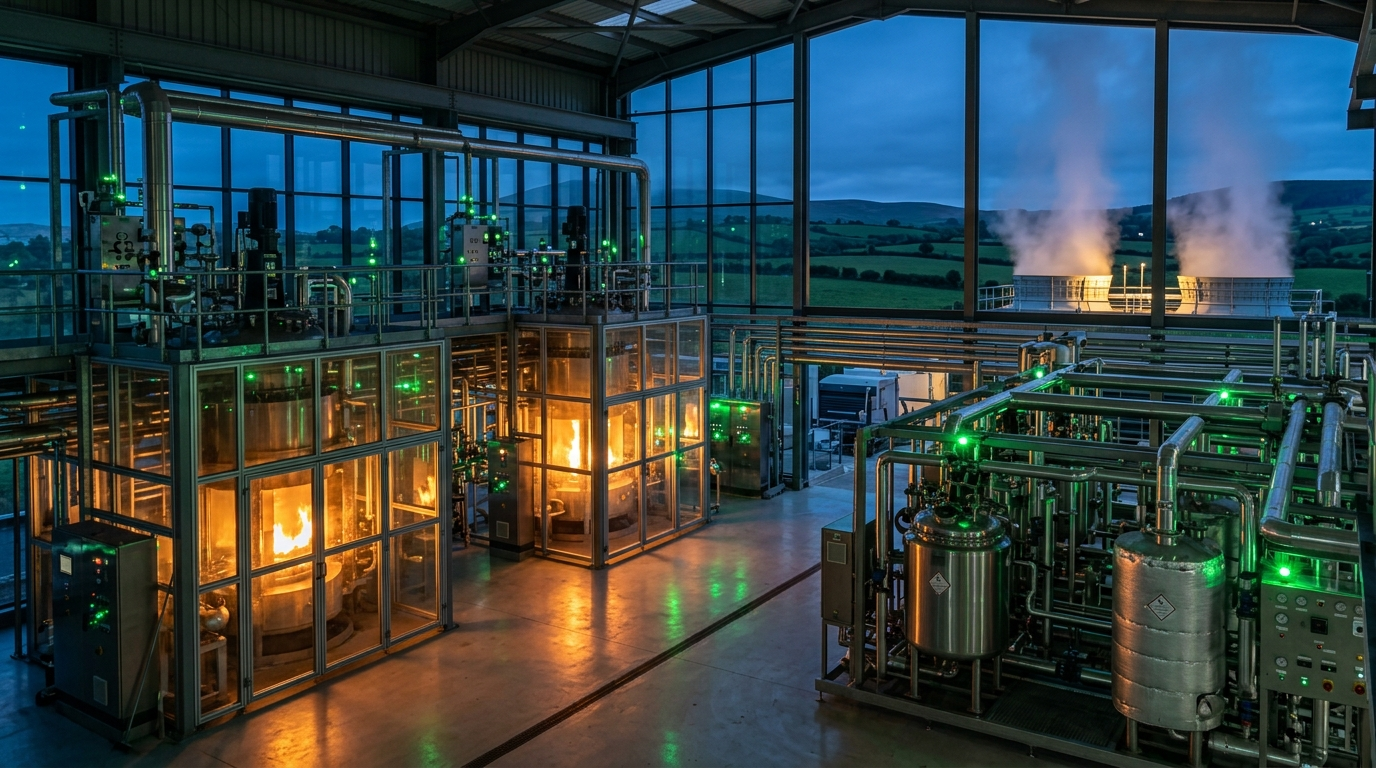
From Plastic Waste to Fuel: How Advanced Pyrolysis is Reshaping Ireland's Circular Economy
Ireland generates over 250,000 tonnes of plastic waste annually. Of that figure, a sobering proportion — somewhere between 30 and 40 per cent — is classed as non-recyclable under conventional mechanical recycling processes. It is too contaminated, too degraded, or composed of mixed polymers that defeat the economics of traditional sortation. For decades, the destination for this residual fraction was straightforward: landfill or export. Neither option is tenable in 2026.
The European Union's Packaging and Packaging Waste Regulation, which entered into force progressively from 2025, sets binding recycled-content targets that will make non-recyclable plastic an existential commercial liability for manufacturers and brand owners across the island. At the same time, Ireland's own circular economy legislation — the Circular Economy and Miscellaneous Provisions Act — places mounting obligations on producers. The pressure is converging from every direction.
Advanced pyrolysis is emerging as the technology that closes this gap. At Premier Green Energy, we have spent the past several years engineering, commissioning, and scaling pyrolysis systems that turn what was previously an intractable waste stream into a commercially valuable feedstock. This piece sets out why the moment has arrived, what the technology actually does, and what business leaders in manufacturing, retail, and waste management should be thinking about now.
What Pyrolysis Actually Does — and Why It Matters at Scale
Pyrolysis is a thermochemical decomposition process. Plastic feedstock is heated in the absence of oxygen — typically between 400°C and 600°C — causing the long polymer chains to break down into shorter hydrocarbon molecules. The outputs are threefold: a liquid fraction (pyrolysis oil, sometimes called pyrolysis-derived fuel or PDF), a syngas fraction that can be used to provide the process's own energy needs, and a solid carbonaceous residue known as char.
The liquid fraction is the primary value driver. Depending on feedstock composition and process conditions, pyrolysis oil from mixed plastics can be used directly as a marine or industrial fuel, upgraded through hydrotreating into naphtha or diesel-equivalent fractions, or — most valuably — fed back into petrochemical crackers as a circular feedstock to produce virgin-quality polymers. That last application, known as chemical recycling to monomer, is what has caught the attention of major European polymer producers and the brand owners who depend on them.
What distinguishes advanced from conventional pyrolysis is the degree of process control: continuous-feed reactor designs, automated feedstock pre-treatment, real-time temperature and pressure management, and integrated condensation trains that allow operators to tune the output product slate. Premier Green Energy's systems are designed from the ground up with these parameters in mind — not as afterthoughts bolted onto an older reactor design, but as the foundation of a commercially viable, continuously operating plant.
Scale matters enormously. A facility processing 10,000 tonnes per annum of plastic waste will generate approximately 7,000 to 8,000 tonnes of pyrolysis oil — a yield of 70 to 80 per cent. At current market pricing for recycled-content feedstocks, driven by EU demand and voluntary commitments from consumer goods companies, that oil carries a significant premium over virgin naphtha. The economics have shifted structurally, and they continue to improve as regulatory pressure tightens.
The Regulatory Tailwind — and Why It Creates Urgency
For businesses still weighing up whether to act, the regulatory picture should sharpen the mind considerably.
The EU Packaging Regulation mandates that, by 2030, contact-sensitive plastic packaging must contain a minimum of 10 per cent recycled content — rising to 35 per cent for non-contact packaging. These targets apply to the packaging placed on the EU market, which means Irish manufacturers supplying into continental Europe are already under obligation to plan their compliance routes. Chemical recycling output — specifically, the mass-balance-allocated recycled content attributed to pyrolysis oil — counts towards these targets under the methodology recently confirmed by the European Commission.
Separately, the EU's Renewable Energy Directive III creates a pathway for waste-derived fuels in hard-to-abate sectors, including maritime and heavy industry. Pyrolysis oil qualifies as a waste-derived fuel under current REDIII interpretations, creating an additional offtake channel and, in some member states, access to renewable fuel support schemes.
Ireland's approach to implementing these frameworks will determine the precise commercial terms available to domestic operators. However, the direction of travel is unmistakeable. Businesses that establish pyrolysis infrastructure now — or that secure contractual access to pyrolysis output streams now — will be positioned to demonstrate compliance with relative ease. Those who defer will face a sellers' market for certified recycled content at precisely the moment their own regulatory deadlines arrive.
What This Means for Irish Businesses — and How to Start
The practical implications differ by sector, but the common thread is that plastic waste that currently costs money to dispose of can become a source of revenue or a guaranteed compliance pathway.
For waste management operators and local authorities, the question is whether existing plastic waste tonnages can anchor a pyrolysis project's feedstock supply. The answer is frequently yes — particularly for operators handling post-consumer rigid plastics, agricultural film, and industrial stretch wrap that are currently exported at a cost or sent to energy-from-waste facilities at low value.
For manufacturers with onsite plastic scrap — packaging trimmings, off-spec product, multi-layer films — the opportunity is even more direct. An on-site or co-located pyrolysis unit can convert internal waste arisings into fuel or feedstock, reducing gate fees, demonstrating supply chain circularity, and potentially contributing to internal carbon accounting targets.
For property developers and industrial estate operators, pyrolysis plants represent an anchor tenant category in the emerging landscape of circular economy infrastructure. Sites with good road access, appropriate planning history, and proximity to industrial waste arisings are in genuine demand from technology operators across Ireland and the wider European market.
At Premier Green Energy, we work across all of these contexts — from feasibility assessments and feedstock characterisation through to full plant design, build, and commissioning. We also provide advisory support to businesses navigating the regulatory landscape around recycled content certification and waste-derived fuel classification.
The window for first-mover advantage in Irish pyrolysis is not indefinite. Planning pipelines take time, grid connections take time, and offtake agreements with petrochemical partners are competitive. The companies that engage now — with seriousness and with the right technical partners — are the ones who will be operating compliant, profitable facilities when the 2030 targets arrive.
To discuss your plastic waste streams and explore whether a pyrolysis solution is right for your organisation, contact Premier Green Energy at pge.ie. Our team is ready to conduct a no-obligation feasibility assessment.


.svg)
.svg)