Closing Ireland's Plastic Recycling Gap: The Industrial Case for Pyrolysis Technology

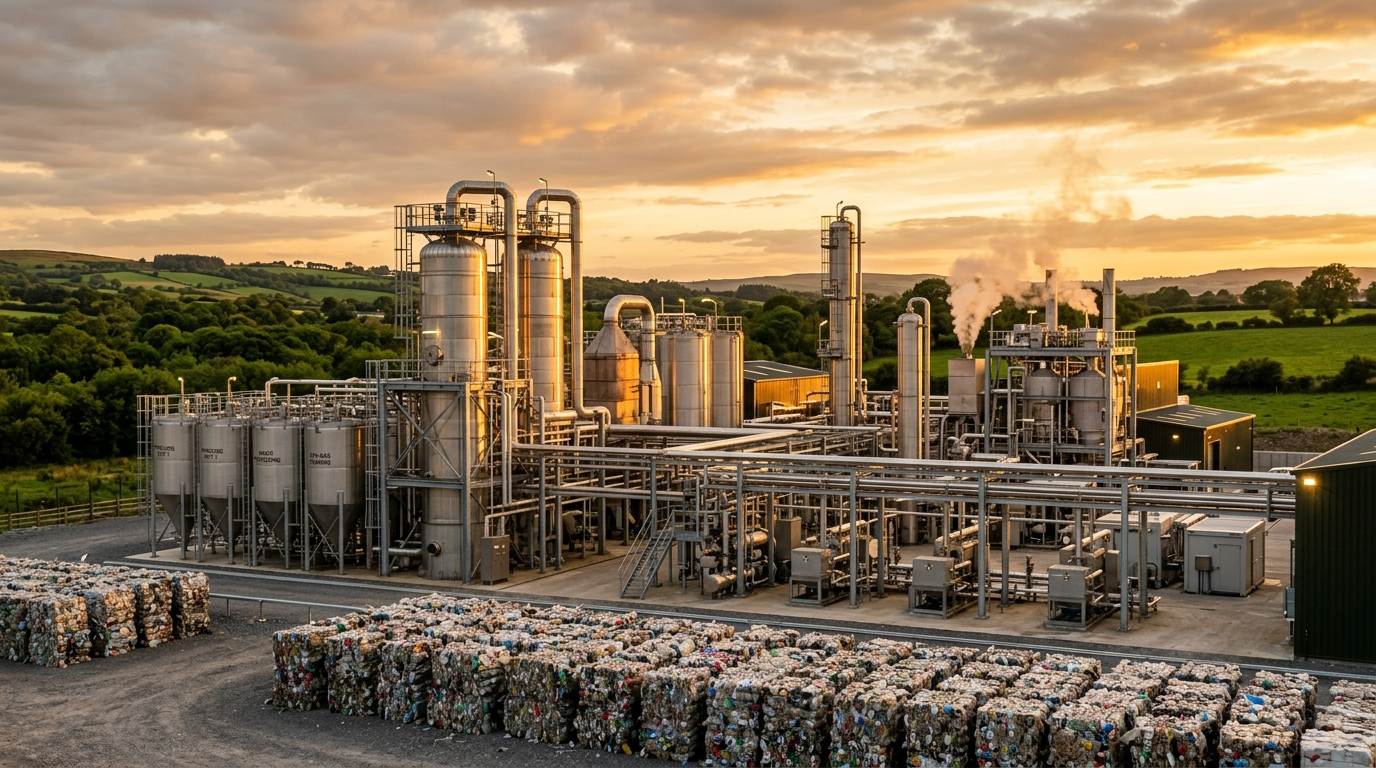
Ireland has a problem with plastic. Despite years of public awareness campaigns, deposit return schemes, and municipal recycling improvements, the country continues to fall short of the targets set by the European Union's Packaging and Packaging Waste Regulation (PPWR). With mandatory plastic recycling rates rising to 55% by 2030 — and chemical recycling content requirements entering force for packaging producers — the question is no longer whether Ireland needs advanced recycling technology, but how quickly that technology can be deployed at industrial scale.
Pyrolysis — the thermal decomposition of organic material in the absence of oxygen — is emerging as the most technically viable and commercially proven pathway for processing the mixed, contaminated, and multi-layer plastics that mechanical recycling simply cannot handle. For B2B operators in the plastics, packaging, and waste management sectors, understanding how pyrolysis fits into the emerging regulatory and commercial landscape is no longer optional. It is a strategic imperative.
The Scale of Ireland's Plastic Challenge
Ireland generated approximately 1.1 million tonnes of packaging waste in the most recent reporting year, of which plastics accounted for a significant proportion. Yet Ireland's mechanical recycling infrastructure — sorting facilities, wash lines, and extrusion plants — is designed to process clean, single-stream thermoplastics: HDPE milk bottles, PET drink containers, and polypropylene food tubs.
The awkward reality is that a large share of plastic waste in Ireland is fundamentally unrecyclable by mechanical means. Flexible packaging laminates, multi-layer films, contaminated agricultural plastics, and composite materials all exit the mechanical recycling system as residue. Much of this material has historically been exported for energy recovery or landfill displacement in third countries — a route that the EU's revised Waste Shipments Regulation is now closing down.
The result is a widening gap between recycling ambition and recycling capacity. Closing that gap requires technologies that can convert difficult mixed plastics into usable outputs at commercial throughput — and pyrolysis is the most mature of those technologies available today.
How Pyrolysis Converts Waste Plastic into Industrial Value
Pyrolysis works by heating plastic feedstock — shredded, sorted, and dried — to temperatures typically between 400°C and 600°C in an oxygen-free reactor environment. The thermal cracking process breaks long polymer chains into shorter hydrocarbon molecules, yielding three primary outputs:
Pyrolysis oil (pyoil): A liquid hydrocarbon product that can be refined into naphtha and diesel-range fractions, used as a petrochemical feedstock for new plastic production, or combusted directly for industrial heat and power generation. High-quality pyoil certified under the ISCC PLUS sustainability standard can be sold into chemical recycling credit markets at significant premiums.
Pyrolysis gas (syngas): Non-condensable hydrocarbon gases — primarily methane, ethylene, propane, and hydrogen — that are typically used within the pyrolysis facility itself as process fuel, dramatically reducing the external energy input required for continuous operation.
Char or carbon black: The solid residue from pyrolysis contains carbon and mineral content from polymer additives. Depending on feedstock quality, this material can be refined into recovered carbon black (rCB) for use in tyre manufacturing, rubber compounding, and ink production — adding a third commercial revenue stream to the operation.
The economics of a modern pyrolysis facility are therefore not simply waste disposal economics. They are feedstock supply and commodity production economics — a distinction that changes how industrial buyers and waste generators should be thinking about offtake and supply agreements.
The Regulatory Tailwind Driving Investment
Two pieces of European legislation are creating compelling commercial urgency for pyrolysis deployment.
First, the Packaging and Packaging Waste Regulation (PPWR), which entered force in 2024, sets mandatory recycled content targets for plastic packaging placed on the EU market. By 2030, contact-sensitive plastic packaging must incorporate a minimum percentage of chemically recycled content, not just mechanically recycled material. This is a direct mandate for pyoil-derived plastic resin — and it places producers and brands under immediate pressure to secure certified chemically recycled feedstock supply.
Second, the EU Taxonomy for Sustainable Finance has clarified criteria for waste-to-energy and chemical recycling investments, making pyrolysis projects eligible for green finance instruments including green bonds and sustainability-linked loans. Irish project developers can now access capital structures that were unavailable to the sector five years ago.
Together, these create a market pull for pyrolysis capacity that is now being reflected in procurement decisions across the plastics value chain.
Industrial Applications: Who Should Be Paying Attention
Pyrolysis technology is not solely relevant to waste management operators. It sits at the intersection of several industrial sectors, each of which is facing its own sustainability and regulatory pressures.
Packaging manufacturers and brand owners facing PPWR recycled content obligations need secure, traceable supply of chemically recycled feedstock. Direct offtake agreements with certified pyrolysis operators provide that supply chain assurance.
Agricultural contractors and farm cooperatives generating significant volumes of contaminated polyethylene films — silage wrap, bale net, mulch film — face increasing difficulty disposing of this material through traditional channels. Pyrolysis is capable of processing agricultural plastics that are entirely excluded from mechanical recycling streams.
Industrial facilities with process waste streams — including automotive, aerospace, and electronics manufacturers generating mixed plastic offcuts and end-of-life components — can convert previously costly disposal obligations into commercially structured supply agreements.
Energy-intensive industries requiring stable process heat or on-site power generation can explore pyrolysis-integrated energy solutions that use waste plastic as a fuel input, reducing both disposal costs and fossil fuel purchasing.
What Distinguishes a High-Quality Pyrolysis Partner
As the pyrolysis sector matures, the commercial and technical capabilities of operators vary significantly. When evaluating a pyrolysis technology partner, industrial buyers should prioritise the following:
Feedstock flexibility: The most commercially valuable pyrolysis systems are designed to handle heterogeneous feedstock with variable contamination levels, not just clean mono-stream plastics. Robust pre-processing — shredding, screening, drying — is as important as the reactor technology itself.
Certification and traceability: ISCC PLUS or equivalent mass-balance certification is essential for any buyer requiring verified recycled content claims for regulatory compliance. Operators who have invested in third-party audit frameworks are positioned to serve premium markets.
Scalability and modular design: Industrial buyers with growing waste streams need partners who can scale capacity in step with supply. Modular pyrolysis systems — designed for phased capital deployment — offer lower initial commitment with a defined expansion pathway.
Integration capability: The most sophisticated operators offer integrated solutions that combine pyrolysis with complementary technologies — anaerobic digestion, mechanical sorting, energy recovery — to maximise the value extracted from complex waste streams.
The Premier Green Energy Approach
At Premier Green Energy, we have been developing and deploying waste-to-energy and pyrolysis solutions for clients across Ireland and beyond. Our approach centres on engineering bespoke systems that align with each client's feedstock characteristics, site constraints, and commercial objectives — whether the primary driver is regulatory compliance, feedstock value recovery, or energy self-sufficiency.
We work closely with waste generators, packaging producers, and industrial facility operators to design integrated solutions that deliver measurable impact: material diverted from landfill, verified recycled content produced, and a clear commercial return on capital invested.
Take the Next Step
Ireland's plastic recycling gap will not close without investment in advanced processing infrastructure. For businesses that generate plastic waste, procure packaging, or operate energy-intensive facilities, pyrolysis is not a future technology — it is available, proven, and commercially structured today.
If you are ready to explore how pyrolysis can work for your operations, we invite you to speak with our team. Contact Premier Green Energy to arrange a technical consultation and feedstock assessment.


.svg)
.svg)