Chemical Recycling at the Crossroads: How Pyrolysis Is Powering Europe's 2030 Packaging Targets

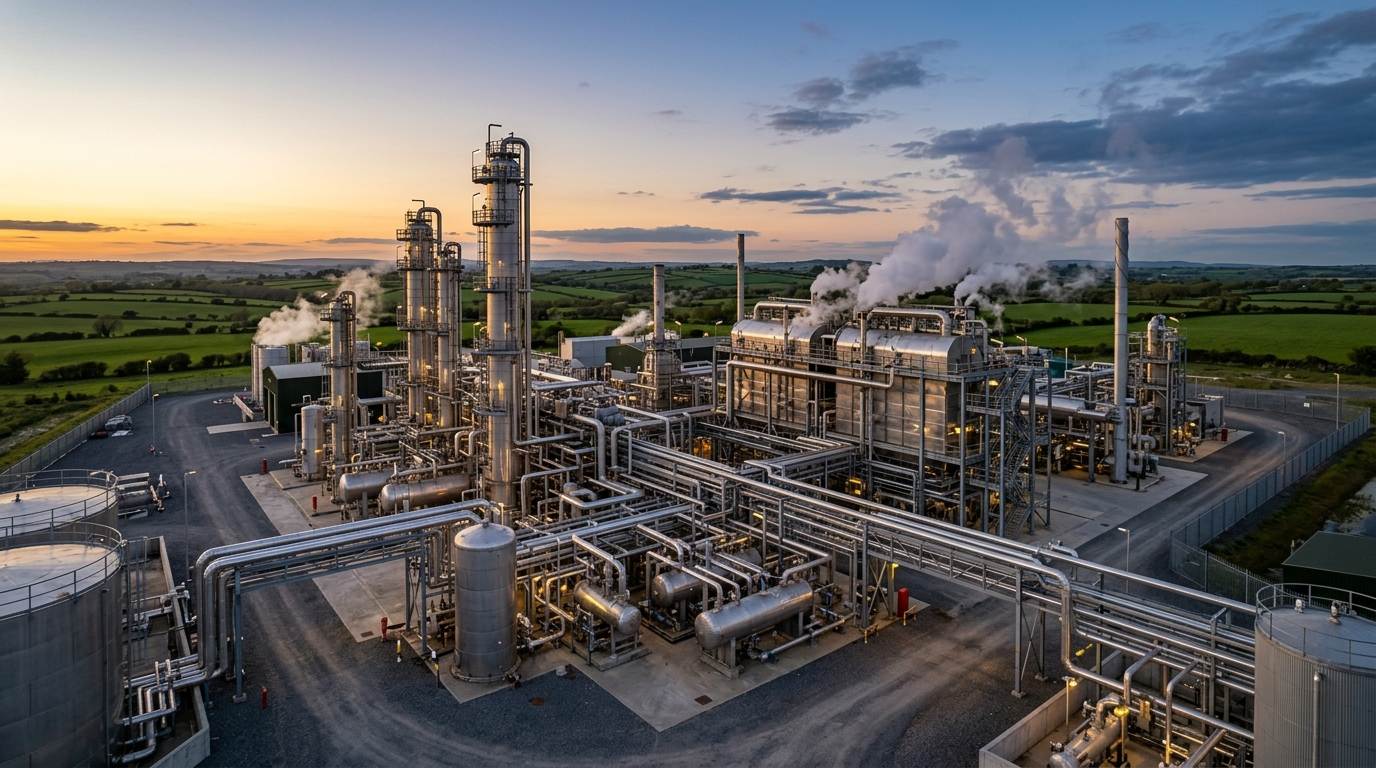
The EU's Packaging and Packaging Waste Regulation (PPWR) is no longer a distant policy ambition. As of mid-2026, European businesses are operating under a regulatory framework that will require escalating proportions of recycled content in plastic packaging — with mandatory thresholds tightening every two years until 2030. For manufacturers, brand owners, and waste operators, the pressure to source compliant recycled feedstocks has never been more acute.
The problem? Mechanical recycling alone cannot bridge the gap.
Pyrolysis — the thermal decomposition of plastic waste in the absence of oxygen — is increasingly recognised as the bridge between today's compliance shortfall and tomorrow's circular economy ambition. And for Irish and European businesses exploring chemical recycling pathways, understanding the technology's potential is no longer optional.
Why Mechanical Recycling Has Reached Its Ceiling
Mechanical recycling has served as the backbone of Europe's plastic recovery infrastructure for decades. It works well for clean, well-sorted, high-value streams — PET bottles, HDPE containers, cardboard-adjacent film. But its limitations are structural, not incidental.
Mixed-colour plastics, multi-layer flexible packaging, contaminated post-consumer streams, and residual waste fractions from materials recovery facilities are all broadly incompatible with conventional mechanical processes. The result is a significant and growing proportion of plastic waste that is either landfilled, incinerated for energy recovery, or exported — none of which satisfies the PPWR's recycled-content accounting requirements.
The EU's own technical studies have acknowledged this ceiling. Mechanical recycling, even operating at optimised collection rates across all 27 member states, cannot realistically deliver the recycled feedstocks required to meet 2030 packaging mandates at scale. The gap is not marginal — it is structural.
This is precisely the space that pyrolysis, and chemical recycling more broadly, is designed to fill.
How Pyrolysis Works — and Why It Matters Now
Pyrolysis converts mixed and contaminated plastic waste into pyrolysis oil — also referred to as synthetic crude — which can be used as a feedstock for new plastics production, or for fuel and chemical synthesis in more advanced configurations.
The process operates at temperatures typically ranging from 300°C to 700°C in an oxygen-free reactor environment. The absence of combustion means that rather than simply burning the material and recovering heat, the plastic's hydrocarbon chains are broken down and reconstituted as recoverable liquid. This pyrolysis oil can be fed into cracker units at petrochemical facilities, substituting for virgin naphtha and enabling the production of new, food-contact-grade plastic — circular plastic that carries verified recycled-content credentials.
From a regulatory standpoint, this matters enormously. The European Chemicals Agency and the European Commission have progressively refined their guidance on mass balance accounting — the methodology by which chemical recyclers can attribute recycled content to specific product batches. Certification schemes, including ISCC PLUS, are now widely adopted across the chemical recycling value chain, providing the audit trail that brand owners and their compliance teams require.
In short: pyrolysis now produces output that is bankable for compliance purposes.
For businesses operating in Ireland — where import-dependent supply chains and a relatively compact but sophisticated waste infrastructure create particular challenges — access to domestic pyrolysis capacity represents a significant strategic advantage. Rather than relying on recycled-content imports from continental markets, Irish manufacturers can increasingly look to local operators to supply compliant feedstocks.
The Commercial Case: From Compliance Cost to Competitive Advantage
It is tempting to frame the PPWR as a compliance burden — another regulatory layer adding cost and complexity to already-stretched packaging supply chains. That framing is understandable, but it misses the medium-term commercial logic.
Businesses that establish supply relationships with certified chemical recyclers today are positioning themselves ahead of what will, by 2028 and 2030, become a highly competitive market for verified recycled-content feedstocks. Demand is accelerating faster than supply. Early movers in securing long-term offtake agreements or invested partnerships with pyrolysis operators will find themselves insulated from the feedstock price volatility that will characterise the late-2020s compliance market.
There is also a growing customer expectation dynamic at play. Major FMCG brands and retailers across Europe are operating under voluntary sustainability commitments — many of which significantly exceed regulatory minimums. These commitments cascade down supply chains, creating demand from packaging converters and polymer producers for recycled content that goes beyond what the law currently requires. Pyrolysis feedstocks, with their ability to serve food-contact and technical applications that mechanical recyclate cannot, are uniquely placed to serve this premium demand.
The cost calculus is also shifting. As pyrolysis plants scale — and several large-capacity European facilities have moved from pilot to commercial operation over the past two years — unit costs are falling. The technology is no longer experimental. It is industrial. And with waste feedstock readily available from residual plastic streams that currently cost money to dispose of, operators are increasingly finding that the economics work in their favour without subsidy.
Ireland's waste-to-energy sector is at an inflection point that mirrors this broader European trajectory. The combination of regulatory tailwinds, maturing technology, and growing corporate demand for verified recycled content is creating conditions for sustained investment in domestic pyrolysis infrastructure.
What This Means for Your Business
Whether you are a packaging manufacturer evaluating your supply chain, a local authority seeking compliant disposal routes for residual plastic fractions, or an industrial waste producer exploring alternatives to landfill or export, the pyrolysis value chain offers options that did not exist at meaningful scale five years ago.
Key questions to be working through now include:
- Feedstock qualification: Does your plastic waste stream contain the types and contamination levels that are suitable for pyrolysis processing? Pre-treatment capabilities have expanded significantly, but understanding your feedstock's chemistry is the starting point.
- Compliance accounting: Which certification pathway — ISCC PLUS, REDcert², or equivalent — is required by your downstream customers or brand owners? The answer determines which processing partners you need.
- Commercial structure: Are you looking to sell plastic waste to a processor, purchase recycled-content oil as a feedstock, or both? The structure of the commercial relationship shapes the economics substantially.
- Timeline: PPWR thresholds tighten progressively. Businesses that begin supplier engagement in 2026 will be in a structurally better position than those waiting for the 2028 compliance period.
Premier Green Energy works with businesses at every stage of this decision process — from initial waste stream assessment through to long-term supply agreements. Our pyrolysis solutions are designed around the operational realities of Irish and European B2B clients, not just the laboratory ideal.
Ready to explore how pyrolysis can work for your business? Contact our team to arrange an initial consultation and waste stream assessment.


.svg)
.svg)