Chemical Recycling at Scale: How Pyrolysis Is Closing the Loop on Hard-to-Recycle Plastics

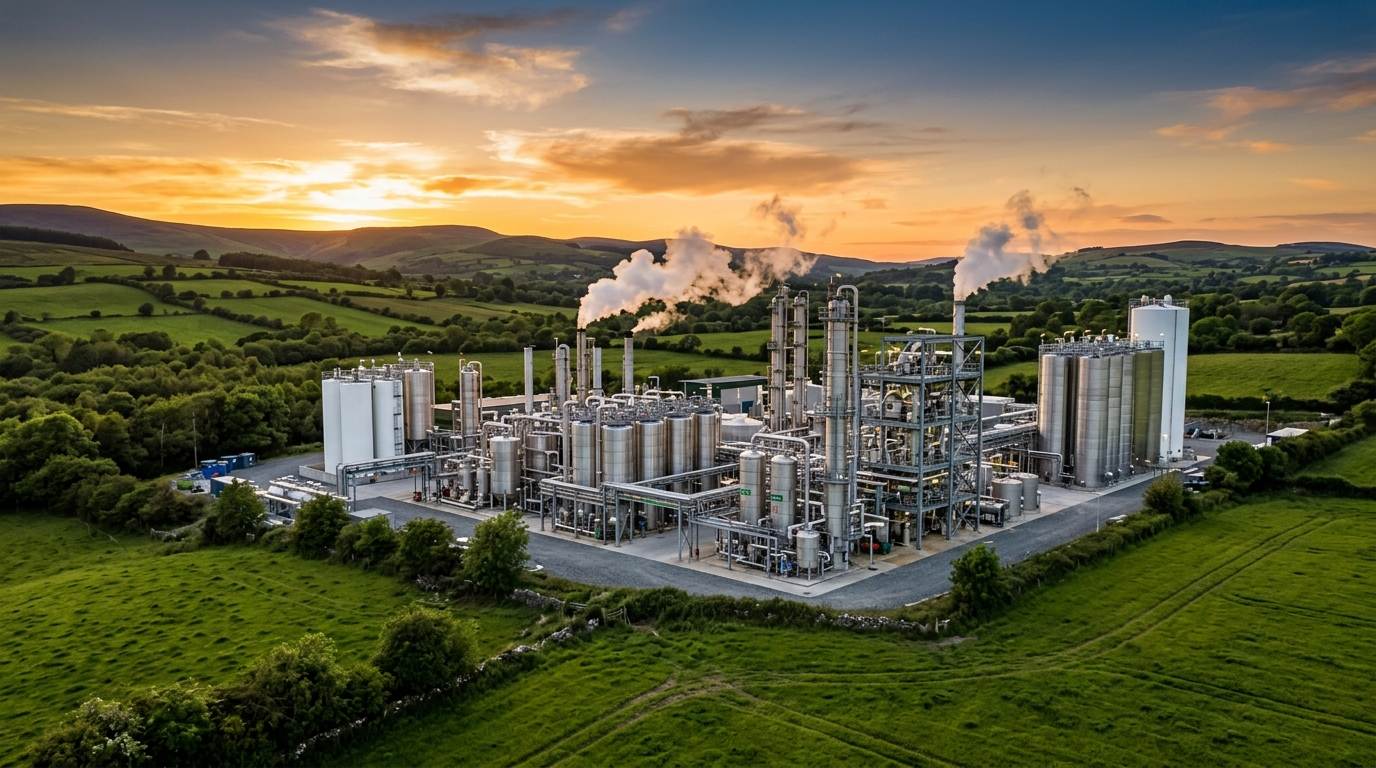
Europe is facing a plastic recycling paradox. On one hand, the EU's Packaging and Packaging Waste Regulation (PPWR) — now in active implementation across member states — mandates that packaging contain increasing proportions of recycled content. On the other, a significant portion of the plastic waste stream remains stubbornly outside the reach of conventional mechanical recycling.
The answer, increasingly, is pyrolysis. And for businesses across the waste management, manufacturing, and energy sectors, the commercial window is opening right now.
Why Mechanical Recycling Alone Cannot Meet the PPWR Mandate
Mechanical recycling — the sorting, shredding, melting, and reforming of plastic — is well-established and cost-effective for clean, single-polymer waste streams such as PET bottles or HDPE containers. But it has hard limits.
Multilayer packaging, contaminated plastics, mixed-polymer laminates, and flexible films cannot be mechanically recycled without significant quality degradation. Industry estimates suggest that between 25% and 40% of Europe's plastic packaging waste falls into this "hard-to-recycle" category — waste that, until recently, was destined for landfill or energy recovery at low efficiency.
The PPWR does not distinguish. Targets for recycled content apply across the board, and the directive specifically references chemical recycling as a qualifying pathway. This creates a clear policy mandate, and with it, a commercial imperative, for scaling up technologies like pyrolysis.
For waste management operators, manufacturers seeking post-consumer recycled (PCR) content for their packaging, and investors looking at the waste-to-value sector, this is a pivotal moment.
How Pyrolysis Converts Plastic Waste Into High-Value Outputs
Pyrolysis works by heating plastic waste in the absence of oxygen, breaking the polymer chains into shorter hydrocarbons. The result is a range of valuable outputs:
- Pyrolysis oil (pyoil): The primary output, used either as a feedstock for petrochemical processes to produce virgin-equivalent plastics (closing the loop), or as a fuel in industrial applications.
- Syngas: A combustible gas fraction that can be used to power the pyrolysis process itself, improving overall energy efficiency and reducing operating costs.
- Solid char: A carbon-rich residue with applications in carbon black production, soil amendment (as biochar), or energy recovery.
Modern continuous pyrolysis systems — particularly those designed to handle mixed and contaminated plastics — can achieve oil yields of 60–75% by weight of input material. At commercial scale, this represents a meaningful contribution to the circular economy targets that industry is now legally required to meet.
Critically, pyrolysis oil that is cracked and refined back into plastic monomer — a pathway known as chemical recycling to monomer (CRM) — produces material that is chemically identical to virgin resin. This is not the case with mechanically recycled content, which typically exhibits degraded performance characteristics after multiple cycles.
The European Landscape Is Shifting Fast
Investment in chemical recycling capacity in Europe has accelerated dramatically over the past 18 months. A combination of policy clarity from Brussels, rising landfill taxes across member states, and growing corporate commitments to recycled content has created the conditions for genuine commercial deployment.
Several large-scale pyrolysis plants are now operational or under construction across Germany, the Netherlands, Poland, and Spain. In Ireland, the opportunity is particularly acute: the country generates approximately 1.1 million tonnes of packaging waste annually, yet domestic chemical recycling capacity remains limited. Waste that cannot be mechanically processed is still largely exported or sent to energy-from-waste facilities.
This gap represents both a challenge and a commercial opportunity for forward-thinking businesses. Companies that establish pyrolysis capacity now — or secure long-term offtake agreements for pyrolysis oil — will be positioned ahead of what is likely to be a supply crunch in chemical recycling capacity through the late 2020s.
The economics are compelling. Gate fees for plastic waste are rising as landfill space contracts and export markets tighten. Meanwhile, pyrolysis oil commands a premium over standard fuel oil when sold into the chemical recycling supply chain, where demand for certified circular feedstocks is outstripping supply.
What Businesses Need to Know Before Investing
Pyrolysis is not a one-size-fits-all technology. System selection, feedstock preparation, and output markets must all be carefully matched to deliver the returns the sector promises.
Feedstock quality matters. Continuous pyrolysis systems perform best with a consistent, pre-sorted input stream. Halogenated plastics — PVC in particular — must be excluded to prevent the formation of corrosive hydrochloric acid within the reactor. Pre-treatment and feedstock screening are not optional; they are fundamental to efficient, safe operation.
Regulatory certification is non-negotiable. For pyrolysis oil to qualify as a recycled feedstock under PPWR, it must meet specific standards for mass balance accounting and traceability. Understanding the certification pathway — whether through ISCC PLUS, REDcert², or equivalent schemes — is essential before committing to a project design.
Scale determines economics. Small-scale batch pyrolysis systems have their place for certain applications, but the economics of continuous, large-scale plants are substantially more favourable. Throughput capacity, uptime, and energy integration all improve markedly at scale. Project developers should model economics carefully across a range of throughput scenarios before finalising plant specifications.
Offtake agreements de-risk the investment. The commercial case for pyrolysis is strongest when output markets are secured in advance. Major petrochemical producers — including several with Irish and UK operations — are actively seeking certified pyrolysis oil supply under long-term agreements. Engaging these buyers early in the project development process significantly improves bankability.
The Premier Green Energy Approach
At Premier Green Energy, we work with clients across the waste management, manufacturing, and energy sectors to evaluate, design, and implement pyrolysis solutions that are matched to their specific feedstock streams and commercial objectives.
Our approach is grounded in operational reality, not promotional aspiration. We understand the feedstock challenges, the regulatory landscape, and the engineering considerations that determine whether a pyrolysis project delivers on its promise.
Whether you are a waste management operator looking to increase the value extracted from your plastic waste stream, a manufacturer seeking to meet recycled content obligations, or an energy business exploring waste-derived fuels, we can help you navigate the opportunity.
The window for establishing a competitive position in chemical recycling is open — but it will not remain open indefinitely. As capacity builds across Europe and policy frameworks tighten further, first-mover advantage will count.
To discuss how pyrolysis can work for your business, contact the Premier Green Energy team today.


.svg)
.svg)