Closing the Loop: How Advanced Pyrolysis Is Solving Europe's Unrecyclable Plastic Crisis

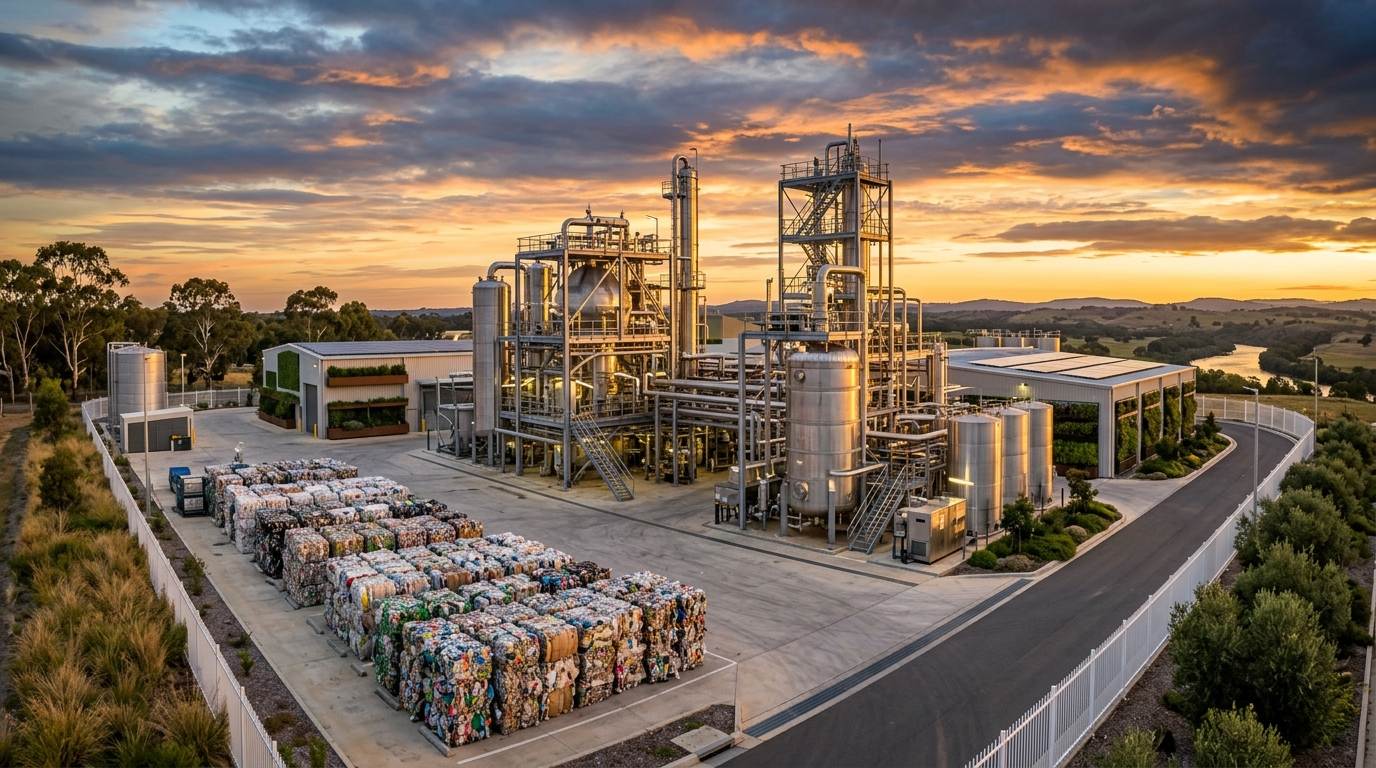
Europe faces a paradox at the heart of its circular economy ambitions. Despite decades of investment in kerbside recycling infrastructure and public awareness campaigns, an estimated 30 to 40 per cent of plastic waste collected across the continent still ends up in landfill or energy recovery — not because no one cares, but because conventional mechanical recycling simply cannot process it.
Contaminated films, multi-layer flexible packaging, post-consumer black plastics: these are the materials that fall through the cracks of the current recycling system. They cannot be sorted reliably, they degrade in quality every time they are reprocessed, and some contain dyes or additives that make them commercially unviable to recycle by conventional means.
Advanced pyrolysis is changing that calculus — and in 2026, the technology has reached a level of commercial maturity that makes it a genuine frontline solution for industry, local authorities, and waste management businesses across Ireland and the wider European market.
What Pyrolysis Actually Does — and Why It Matters Now
Pyrolysis is the thermal decomposition of organic materials in the absence of oxygen. When applied to plastic waste, the process breaks long polymer chains down into shorter hydrocarbon molecules, producing three output streams: pyrolysis oil (also called pyrolysis liquid or PLO), syngas, and a solid char residue.
The pyrolysis oil is the primary value-added product. Depending on the feedstock and process conditions, it can be used directly as a fuel in industrial burners and marine engines, or refined further into naphtha and diesel fractions that serve as drop-in fuels or feedstocks for new petrochemical production. This last application — producing new plastic from plastic — is what makes pyrolysis central to the EU's chemical recycling framework.
The syngas generated during pyrolysis is typically recirculated within the plant to provide process heat, significantly reducing the external energy demand of the system. The char, meanwhile, has emerging value as a carbon-rich material in construction and — when produced from biomass co-feeds — as biochar for soil amendment.
Why does this matter now, in 2026? Because regulatory timelines have arrived. The EU's Packaging and Packaging Waste Regulation (PPWR), agreed in 2024 and entering force progressively through the late 2020s, sets mandatory recycled content targets for plastic packaging sold across the Single Market. For packaging grades that cannot be addressed by mechanical recycling, chemical recycling — including pyrolysis — is explicitly recognised as a compliance pathway. Businesses that have not yet begun mapping their supply chains against these requirements are running out of runway.
The Feedstock Question: What Can Pyrolysis Handle?
One of the most persistent misconceptions about pyrolysis is that it is a technology of last resort — a way to dispose of material that has no other outlet. In reality, modern pyrolysis systems are highly selective about feedstock quality, and the best operators treat their incoming material with the same rigour as any other manufacturing process.
The optimal feedstock for most commercial pyrolysis units is clean, sorted mixed plastics with a polyethylene (PE) and polypropylene (PP) bias, though systems vary in their ability to handle PET, polystyrene, and other polymer types. Pre-processing — shredding, density separation, and drying — is almost always required before material enters the reactor.
This is not a weakness of the technology; it is a design constraint that drives value. By investing in upstream sorting and preparation, operators achieve consistently high pyrolysis oil yields (typically 60 to 80 per cent by weight for high-calorific mixed polyolefins) and reduce contamination in the output product, which in turn supports higher market prices.
For waste management operators in Ireland and the UK, this creates a compelling opportunity. Material that currently commands negative gate fees — because it costs money to landfill or incinerate — can instead be converted into a product with positive market value. The economics are not yet uniformly straightforward, and feedstock supply chain development remains a genuine challenge, but the direction of travel is clear.
From Waste Stream to Revenue Stream: The Business Case in 2026
The business case for pyrolysis has historically been challenged by oil price volatility: when crude is cheap, pyrolysis oil struggles to compete on price alone. But three structural changes have improved the investment case considerably over the past 18 to 24 months.
First, carbon accounting. Pyrolysis oil produced from waste plastic and used as a fuel displaces virgin fossil fuels, generating carbon credits under voluntary and compliance carbon market frameworks. For operators with credible measurement and verification in place, carbon revenues can add meaningfully to project economics.
Second, feedstock access. The consolidation of municipal plastic waste collections across Ireland and the maturation of commercial and industrial (C&I) waste sorting infrastructure means that consistent, contracted feedstock supply — long the Achilles heel of early pyrolysis projects — is increasingly achievable.
Third, end-market diversification. Beyond fuel applications, offtake agreements with petrochemical producers seeking to meet recycled content mandates have opened a new, premium pricing tier for pyrolysis oil. Product that can be certified as meeting a recognised mass-balance standard — such as ISCC PLUS — commands a significant premium over commodity fuel equivalents.
For industrial businesses generating consistent volumes of plastic waste — manufacturers, food processors, logistics operators — pyrolysis is increasingly worth evaluating not just as a waste disposal channel, but as a strategic asset within a broader sustainability and compliance programme.
What to Look For in a Pyrolysis Partner
Not all pyrolysis technology is equal, and the market has seen its share of operators who have overpromised on throughput, oil yield, and operational uptime. When evaluating a pyrolysis solution — whether for a waste-to-energy project, an industrial decarbonisation initiative, or a compliance-driven circular economy strategy — there are several questions that separate credible operators from aspirational ones.
Proven throughput at scale. Bench-scale and pilot results rarely translate directly to commercial-scale operations. Ask for reference sites operating at commercial scale and visit them if at all possible.
Feedstock flexibility and pre-processing capability. The ability to handle real-world, variable-quality feedstock — not laboratory-grade sorted material — is a mark of genuine technical maturity.
Offtake and end-market clarity. A pyrolysis plant without a credible, contracted home for its output products is a project, not a business. Understand exactly where the oil, gas, and char are going, and under what terms.
Compliance and certification support. For customers seeking to use pyrolysis as a pathway to meeting recycled content mandates, the ability to support mass-balance certification is non-negotiable.
The next five years will be decisive for pyrolysis as an industrial sector. Regulatory pressure from the PPWR and related EU frameworks will increase demand for chemically-recycled feedstocks. Carbon market maturation will improve project economics. Technology improvements — including continuous-feed reactor designs and improved oil quality — will reduce operational costs.
For businesses across Ireland and Europe, the window to get ahead of this transition is open — but it will not remain so indefinitely. Those who begin feasibility assessments, feedstock mapping exercises, and partner evaluations now will be better positioned to meet 2030 compliance targets with confidence.
At Premier Green Energy, we work with industrial and commercial clients across Ireland to design, source, and implement advanced pyrolysis and waste-to-energy solutions tailored to their specific feedstock profiles and commercial objectives. If your business is generating plastic waste that your current recycling channels cannot handle, we would welcome the opportunity to discuss what pyrolysis could mean for your operations.
Contact Premier Green Energy today to arrange a no-obligation consultation with our technical team.


.svg)
.svg)