Turning Waste into Clean Energy: How Advanced Thermal Treatment Supports a Net-Zero Future

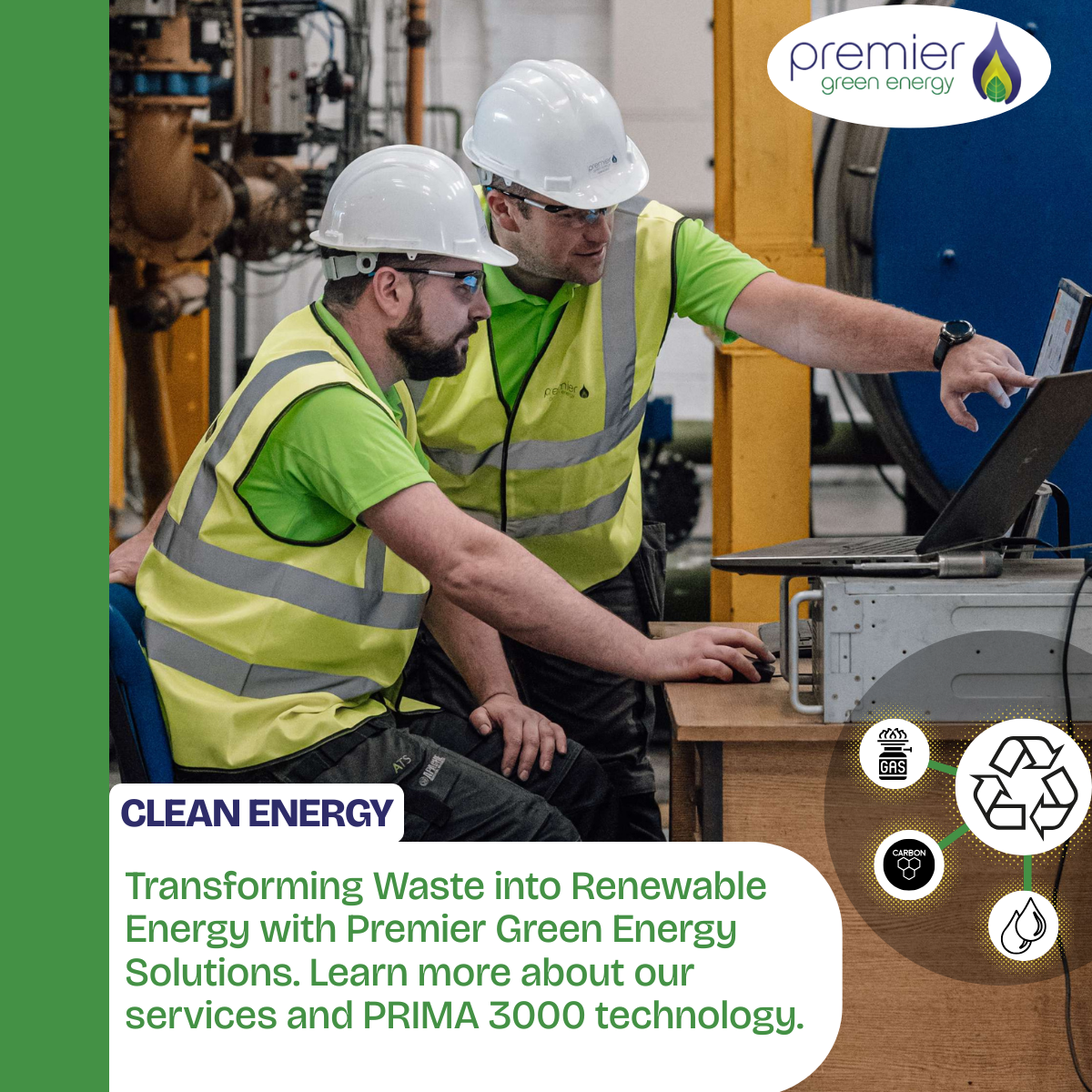
Turning Residual Waste into Clean Energy: A Practical Path to Net Zero
As waste streams become more complex and sustainability targets more demanding, traditional disposal methods such as landfill and export are no longer viable long-term solutions. Residual and difficult-to-recycle waste continues to pose environmental, regulatory, and economic challenges for local authorities and industry alike.
At Premier Green Energy, we focus on technologies that transform these challenges into opportunities — converting waste into clean energy and recoverable resources while supporting circular economy and net-zero objectives.
From Waste Liability to Energy Resource
Many residual waste streams are often viewed as a cost burden, destined for disposal or export. Through advanced thermal treatment, these materials can instead be converted into valuable outputs, including clean synthetic gas, recoverable carbon, and usable thermal energy.
By operating in a controlled, high-temperature, oxygen-limited environment, advanced thermal systems break down complex waste at a molecular level. This approach avoids direct combustion while maximising energy recovery and significantly reducing residual material volumes.
The result is a cleaner, more efficient alternative to traditional waste treatment routes.
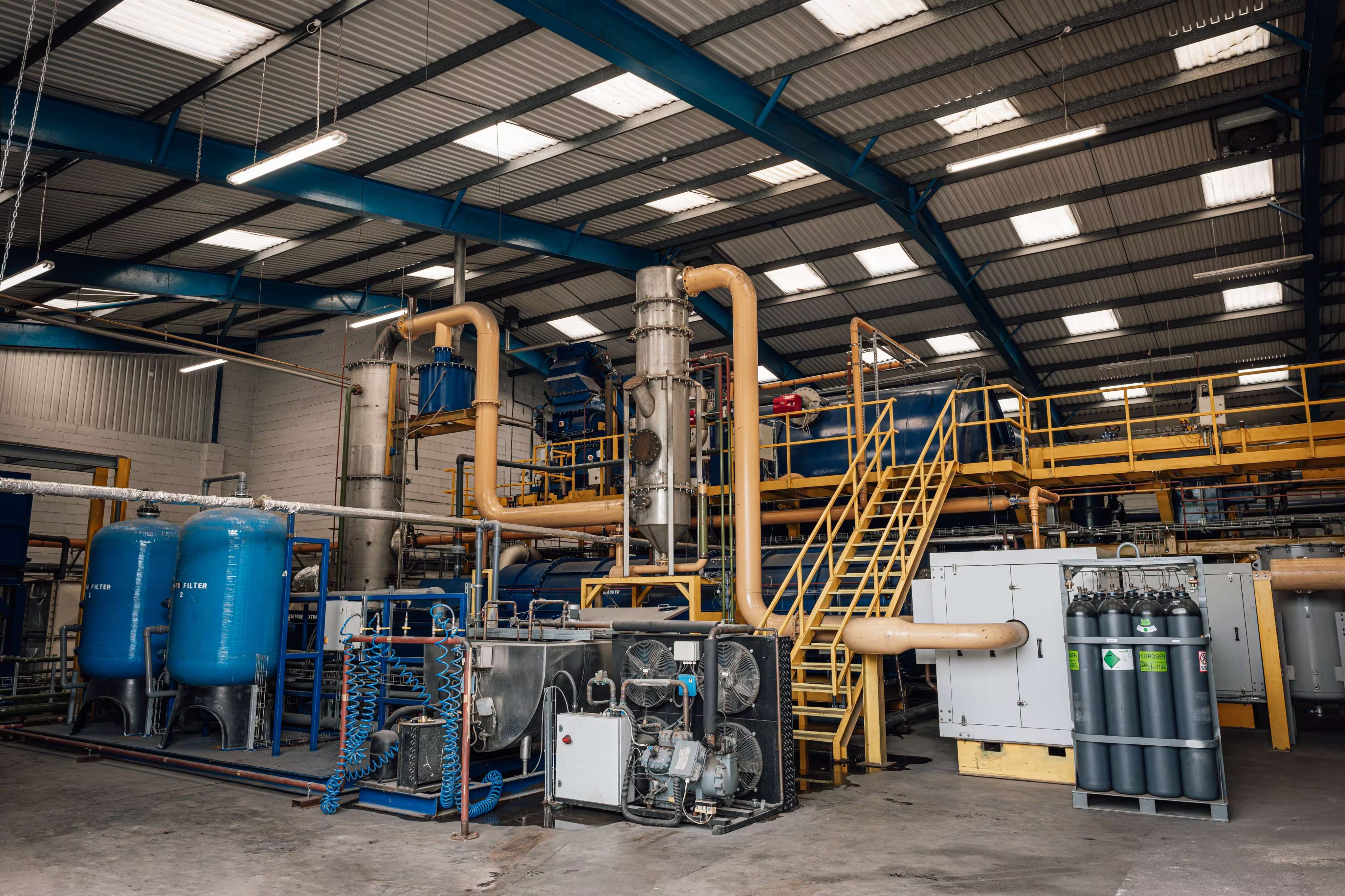
Reducing Emissions and Environmental Impact
One of the key advantages of advanced thermal treatment is its ability to reduce greenhouse gas emissions associated with landfill and long-distance waste transport. Capturing energy from waste locally helps displace fossil fuel use while preventing methane emissions that would otherwise be released during decomposition.
This approach supports:
- Lower overall carbon emissions
- Reduced reliance on landfill and export
- Improved compliance with tightening environmental regulations
For organisations working toward decarbonisation targets, waste-to-energy solutions offer measurable environmental benefits alongside operational resilience.
Supporting Circular Economy Goals
Advanced thermal treatment aligns closely with circular economy principles. Instead of disposing of residual waste, valuable outputs are recovered and reintegrated into energy and industrial systems.
Recovered syngas can be used for power generation or industrial heating, while carbon-based residues may be further processed or utilised, depending on application. This ensures that materials are kept in productive use for as long as possible, reducing the need for virgin resources.
Energy Security and Cost Stability
Rising energy costs and supply volatility are placing increased pressure on both public and private sector operators. Converting waste into a local energy source provides greater energy security and cost predictability, particularly for industrial and infrastructure applications.
On-site or localised energy generation also reduces exposure to global fuel markets, while making productive use of waste streams already being managed.
A Scalable Solution for the Future
As regulatory frameworks evolve and sustainability expectations increase, scalable waste-to-energy solutions will play a critical role in future infrastructure planning. Advanced thermal treatment systems are designed to grow with demand, integrating with existing operations while delivering long-term environmental and economic value.
Premier Green Energy continues to develop and deploy innovative technologies that support resilient waste management, clean energy generation, and a more sustainable future.

Key Takeaways
- Converts residual waste into clean, usable energy
- Reduces landfill dependency and waste export
- Supports net-zero and circular economy targets
- Improves energy security and cost stability
- Designed for scalable, long-term deployment
Looking Ahead
Waste is no longer just a disposal challenge — it is an untapped resource. By embracing advanced thermal treatment, organisations can turn residual waste into a reliable source of clean energy while meeting environmental obligations and future-proofing operations.


.svg)
.svg)