Green Biorefineries: How Premier Green Energy is Turning Grass into Clean Fuel and Valuable Resources


Beyond Waste: The Green Biorefinery Opportunity
When most people think of renewable energy, they think of solar panels or wind turbines. But one of the most compelling — and underexplored — frontiers in sustainable energy involves something far more familiar: grass.
Premier Green Energy is at the forefront of green biorefinery development in Ireland, working on two landmark projects that demonstrate how agricultural biomass — particularly grass — can be transformed into clean biogas, valuable proteins, and other high-value outputs. These projects, at Munster Technological University (MTU) in Tralee and at Farm Zero C in Bandon, Co. Cork, represent a significant step forward in Ireland's transition to a circular, low-carbon economy.

What Is a Green Biorefinery?
A green biorefinery is a facility that processes fresh or ensiled grass and other agricultural biomass to extract multiple valuable products simultaneously. Unlike a conventional single-output energy plant, a biorefinery is designed around the principle of maximum resource recovery — extracting every unit of value from the input material before anything enters final disposal.
In the context of grass-based biorefineries, the core process typically involves:
- Mechanical pressing of grass to separate a protein-rich juice from a fibre fraction
- Anaerobic digestion of the juice and fibre to produce biogas, which can be upgraded to biomethane for injection into the gas grid or used for on-site power generation
- Protein extraction from the juice fraction, producing a high-quality plant-based protein suitable for animal feed or, in some applications, human food supplements
- Digestate recovery, which can be used as a high-quality organic fertiliser, returning nutrients to farmland and completing the circular loop
The result is a system that produces clean energy, valuable biochemicals, and a soil amendment — all from a crop that grows abundantly across Ireland's fertile agricultural landscape.

The MTU Tralee Project
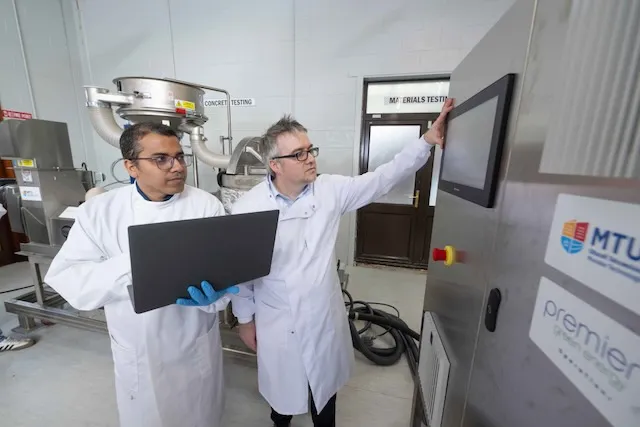
Premier Green Energy's collaboration with Munster Technological University in Tralee is one of the most significant green biorefinery research and demonstration initiatives in Ireland. The project is designed to prove the technical and economic viability of grass-based biorefinery technology at pilot scale, generating data and operational insights that will underpin future commercial deployment.
At the MTU site, the system processes locally sourced grass through a multi-stage treatment process. The outputs include biogas for energy generation, a protein fraction with potential applications in the animal feed sector, and a nutrient-rich digestate that can be returned to agricultural land as a natural fertiliser.
The MTU partnership also positions Premier Green Energy within a research ecosystem that brings together engineering, agriculture, and environmental science expertise — accelerating the pace at which biorefinery technology can move from demonstration to commercial reality.
For Ireland, where grass is the dominant agricultural crop and the dairy and beef sectors are central to the rural economy, the implications are substantial. A commercially viable green biorefinery model could provide Irish farmers with a new revenue stream from surplus grass, while contributing to national targets for renewable energy and reduced agricultural emissions.

Farm Zero C: Biorefinery on a Working Farm
The Farm Zero C project in Bandon, Co. Cork takes the green biorefinery concept into a real-world agricultural setting. Farm Zero C is an industry-leading initiative focused on creating a commercially viable, carbon-neutral dairy farming system — and Premier Green Energy's biorefinery technology is a central component of that ambition.
On a working farm, the integration of a green biorefinery changes the economics of the operation fundamentally. Grass that might otherwise be surplus to requirements becomes a feedstock for biogas production. Protein extracted from that grass can reduce the farm's reliance on imported feed. Digestate returns nutrients to the soil, potentially reducing the need for chemical fertilisers. And the energy generated on-site reduces the farm's exposure to volatile electricity and gas prices.
Farm Zero C is demonstrating that carbon neutrality in agriculture is not simply a theoretical aspiration — it is an achievable operational reality when the right technologies are applied in an integrated way. Premier Green Energy's biorefinery contribution to this project reflects a broader conviction: that the farm of the future will be not just a food producer, but an energy and resource hub.
Why Grass? Ireland's Natural Advantage
Ireland's temperate, Atlantic climate is exceptionally well suited to grass growth. The country has some of the highest grass yields in Europe, and the agricultural sector is heavily oriented around grass-fed livestock systems. This creates a natural abundance of the primary feedstock that green biorefinery technology requires.
At the same time, Ireland faces significant challenges in meeting its climate commitments. Agriculture is one of the largest contributors to national greenhouse gas emissions, and finding ways to reduce the sector's carbon footprint while maintaining economic viability is a key policy priority. Green biorefineries offer a path that achieves both objectives simultaneously — reducing emissions from agricultural waste management while generating clean energy and valuable co-products.
The combination of Ireland's grass productivity and the multi-output value of green biorefinery technology creates a compelling case for scaling this approach across the country.
Looking Ahead: From Pilot to Commercial Scale
The projects at MTU Tralee and Farm Zero C are building the evidence base — technical, operational, and economic — that will be needed to justify commercial-scale green biorefinery investment in Ireland. Premier Green Energy's involvement in both initiatives reflects a long-term commitment to this technology pathway and a conviction that it represents one of the most promising intersections of agricultural sustainability and renewable energy development.
As Ireland's bioeconomy strategy develops and investment in rural renewable energy infrastructure grows, green biorefineries are well positioned to play a central role — converting one of the country's most abundant natural resources into clean energy, valuable materials, and a more sustainable agricultural future.
Key Takeaways
- Green biorefineries process grass and agricultural biomass into biogas, protein, and organic fertiliser simultaneously
- Premier Green Energy is developing green biorefinery projects at MTU Tralee and Farm Zero C in Bandon, Co. Cork
- The MTU project is demonstrating the technology at pilot scale, generating data for future commercial deployment
- Farm Zero C is integrating biorefinery technology into a working dairy farm as part of a carbon-neutral farming model
- Ireland's grass productivity and climate commitments make it an ideal location for scaling green biorefinery technology


.svg)
.svg)